Is Gothic Kitchenware Food Safe? How to Read the Listing
Resin, stainless and glazed ceramic answer this question three different ways. What the markings mean, what a decorative-only label legally signals, and the checks to run on a listing before you eat off it.
Novelty kitchenware sits in an awkward gap. A skull mug sold as tableware and a skull mug sold as an ornament can look nearly identical in a photograph, come from the same factory, and cost about the same, while only one of them was ever tested for what leaches out of it. The material tells you most of what you need to know before the listing does: resin is decor, stainless steel is fine when it carries a grade marking, and glazed ceramic depends entirely on whether it was manufactured as dinnerware or as decoration. The rest is knowing which phrases in a listing are legally meaningful and which are marketing.
Resin is decor, and that is the whole answer
Most sculptural gothic pieces — skulls, gargoyles, anatomical hearts, figural planters, the ornate bases on candle holders — are cast polyresin. It is not a food-contact material. It is not heat stable, so hot liquid can soften or craze it. It is commonly finished with paints and sealers chosen for appearance rather than for ingestion, and no part of the object was assessed for what happens when food sits against it.
This is not a borderline call and it does not vary by seller. If a piece is resin, it holds dry non-food items, clean utensils, or a potted plant with a liner between the soil and the resin. It does not hold food, it does not go in a microwave or a dishwasher, and hot drinks do not go into it. That still leaves resin useful for a great deal of a kitchen, as long as the useful part is not the part touching your dinner.

Stainless steel: the marking is the specification
Cutlery and serving pieces are the easy category, because stainless steel carries a grade and the grade is the answer. Look for 304, or the same alloy written as 18-8, which describes roughly eighteen percent chromium and eight percent nickel. That is the standard food-grade stainless used for flatware and kitchen tools. The 18-10 designation is the same family with slightly more nickel and a little more corrosion resistance and shine.
You will also see 18-0, which contains effectively no nickel. It is still suitable for food use, but it is more prone to spotting and surface corrosion over time, and it is magnetic where the others generally are not. It is the budget end rather than a safety problem.
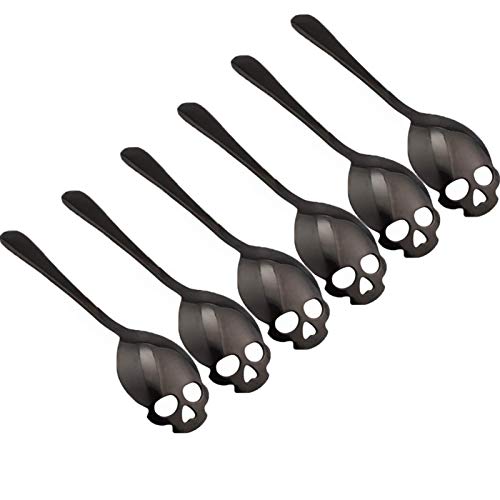
Coated matte black flatware adds a variable. The steel underneath is unchanged, but the black layer is a surface treatment, either a vapour-deposited coating or an applied finish, and it is the part that degrades. Dishwasher detergent and sustained high heat are what strip it. Hand washing is the difference between a set that stays black for years and one that goes patchy in months.
Glazed ceramic: the line between dinnerware and decoration
Ceramic is where the real ambiguity lives, because glaze can contain lead and cadmium, and how much of it migrates into food depends on the formulation and how thoroughly the piece was fired. Ceramicware intended for food in the United States is subject to Food and Drug Administration limits on how much lead may leach out, with different limits for different vessel shapes, since a mug holds acidic liquid against the glaze far longer than a plate holds a sandwich.
Decorative ceramicware is not held to the dinnerware limits, and that is precisely why the labelling exists. Under the FDA's rules for ornamental and decorative ceramicware, a piece that exceeds the limits has to carry a conspicuous statement that it is not for food use and may poison food, or else be permanently marked, for example with a hole bored through the potential food-contact surface so it cannot be used as a vessel at all.
The practical consequence for a shopper is simple. A listing that says decorative only, not for food use, or display purposes only is not the seller hedging. Treat that phrasing as the specification, not as boilerplate. Conversely, a piece genuinely sold as dinnerware will normally say food safe, dishwasher safe or microwave safe somewhere in the listing, because those are selling points nobody leaves out.

What a California Proposition 65 warning actually tells you
Tableware sold into California often carries a Proposition 65 warning about lead or cadmium exposure, and it alarms people more than it should. Proposition 65 sets its own exposure thresholds, which are lower than the federal action levels, and it is a warning requirement rather than a sales ban. A piece can carry the warning and still be legal dinnerware.
What it does tell you is that the manufacturer either measured a detectable amount or chose to label defensively rather than test, which many do because the warning is cheaper than the analysis. It is a reason to prefer a piece without one when you have the choice, and a reason to keep a warned piece for occasional use rather than for a child's daily cup or for storing acidic food. It is not, by itself, evidence that a piece failed anything.
Metallic lustre, the microwave, and the dishwasher
Gothic tableware leans heavily on gold and silver lustre detailing, and lustre is a genuinely thin layer of metal fired onto the glaze. It will arc in a microwave. That is not a durability caution, it is a fire risk, and it applies to any piece with metallic trim regardless of what the rest of the item is made from.
Lustre and hand-applied decoration also sit on top of the glaze rather than under it, which is why so much decorated tableware is marked hand wash only. Dishwasher detergent is abrasive and alkaline by design, and repeated cycles dull and eventually lift surface decoration. Under-glaze decoration, where the pattern is applied before the clear glaze and fired beneath it, survives the dishwasher far better and is worth looking for on anything you plan to use daily.
Reactive and crackle glazes deserve one extra note. The fine crazing that gives them their character is a network of openings in the glaze surface, and it can hold moisture and staining over time. On a decorative piece that is character. On something used for food every day it is a reason to prefer a smooth, fully vitrified glaze.
The checks to run before you buy
Identify the material first, because it settles most cases on its own. If the listing says resin, polyresin or composite, it is decor and no further checking is needed. If it says stainless steel, look for the 304, 18-8 or 18-10 marking. If it says ceramic, stoneware or porcelain, keep reading.
Then look for the explicit phrases. Food safe, dishwasher safe and microwave safe are claims a seller makes deliberately, and their absence on a piece that is otherwise clearly tableware is itself informative. Decorative only and not for food use are the ones to take literally.
Check the shape against the use. A deep vessel that will hold coffee, wine or anything acidic for long stretches is the demanding case; a flat plate is the forgiving one. And when a listing is genuinely ambiguous, the sensible default is to treat the piece as decorative, because the cost of being wrong in that direction is an ornament you paid slightly too much for, and the cost of being wrong in the other direction is not.
Common questions
Can I drink from a resin skull mug?
No. Resin is not a food-contact material and is not heat stable, so hot liquid is the worst case for it. Resin drinkware is an ornament regardless of how it is photographed or described. If you want the look in something you can actually drink from, buy glazed ceramic sold explicitly as tableware.
What does 18-8 mean on stainless flatware?
Roughly eighteen percent chromium and eight percent nickel, which is the same alloy as grade 304 and the standard food-grade stainless for cutlery. 18-10 is the same family with a little more nickel, slightly more corrosion resistance and more shine. 18-0 has effectively no nickel, is still usable for food, but spots and corrodes more readily.
Is a Proposition 65 warning on dinnerware a reason not to buy it?
Not on its own. Proposition 65 uses thresholds lower than the federal limits and requires a warning rather than prohibiting the sale, and many manufacturers label defensively instead of testing. Prefer an unwarned piece when you have the choice, and avoid using a warned piece for a child's daily cup or for storing acidic food.
Why is so much gothic tableware marked hand wash only?
Because the decoration usually sits on top of the glaze rather than under it. Metallic lustre and hand-applied patterns are dulled and eventually lifted by dishwasher detergent, which is abrasive and alkaline by design. Under-glaze decoration handles a dishwasher much better.
Can gothic dishes with gold detailing go in the microwave?
No. Metallic lustre is a real, if very thin, metal layer and it will arc. That applies to gold and silver trim on any ceramic, and it is a fire risk rather than a wear issue.
How do I tell decorative ceramic from real dinnerware in a listing?
Look for the explicit phrases. Decorative ceramicware that exceeds the federal leaching limits is required to say it is not for food use, so that phrasing is a specification rather than a disclaimer. Genuine dinnerware nearly always advertises food safe, dishwasher safe or microwave safe, because those are selling points. When a listing is ambiguous, default to treating the piece as decorative.