Blackout vs Room-Darkening vs Light-Filtering Curtains
What the three light-control terms actually mean, why 'blackout' curtains still leak light around the edges, how liners upgrade curtains you already own, and which level a dark interior actually needs.
Curtain listings use three light-control terms as if everyone agreed on them, and then sell fabric that doesn't quite match any of them. The terms do mean something — but the fabric is only half of what determines how dark a room gets. Here's what each level really delivers, and why the edges matter as much as the material.
The three levels, defined honestly
Blackout fabric is constructed to block essentially all light passing through it — either a dense triple-woven fabric or a regular face fabric with an opaque backing layer. Room-darkening blocks most light but not all; hold it up to a bright window and you'll see a glow. Light-filtering doesn't try to block light at all — it diffuses it, trading glare for privacy and softness.
Sellers apply these labels loosely, and 'blackout' in a listing title sometimes describes room-darkening fabric. The giveaway is construction: true blackout names a backing, a liner, or triple-weave in the description. When the listing only says the word, assume the weaker level.
The fabric isn't the leak — the edges are
Hang perfect blackout fabric on an ordinary rod and the room still won't be dark, because light comes around the panel, not through it: over the top, down the sides, and through the centre split. This is the part listings never mention, and it's why 'blackout curtains that don't work' is such a common complaint.
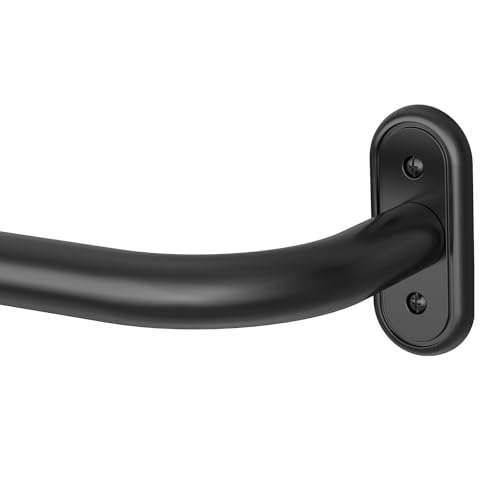
The fixes are mounting, not fabric. Panels wider and longer than the window overlap the frame and kill the side glow — the fullness and drop conventions in our sizing guide already get you most of the way. A wraparound rod curves the panel ends back to the wall. Mounting the rod higher and closer to the ceiling closes the top gap. For a genuinely dark room — shift workers, projector rooms — some people add side channels or hook-and-loop strips at the wall, which is effective and unglamorous.
Liners: keep the curtains, add the darkness
If you already own curtains you love — and in this aesthetic, the velvet or damask is usually the point — a blackout liner is the better upgrade than replacement. Liners hang behind the decorative panel on the same rod or their own small hooks, add the light-blocking layer, and are invisible from the room.
The liner also takes the sun instead of the face fabric, which is what fades dark textiles unevenly. For velvet curtains specifically that's a double win, covered from the care side in our velvet guide.

Which level a dark interior actually needs
The gothic look reads as darkness, but most living spaces are better served by room-darkening than true blackout — a room with zero daylight is a room where the velvet, the brass, and the wall art do nothing. Heavy velvet is naturally room-darkening on its own; that's usually the right level for living rooms and studies.
True blackout earns its place in bedrooms, especially for anyone sleeping against the sun's schedule, and anywhere a screen fights glare. A reasonable pattern for a whole home: blackout construction or liners in the bedroom, unlined heavy fabric everywhere else.
Thermal and noise, briefly
Dense curtain fabric adds a real insulating layer at the window — the same construction that stops light slows heat moving through the glass in both directions, which is why blackout and triple-weave panels are often marketed as thermal. The effect is real but modest; it supplements a bad window, it doesn't fix one.
The same goes for sound: heavy fabric absorbs some room echo and softens outside noise slightly. Treat both as side benefits that come free with the weight, not reasons to buy on their own.
Common questions
What's the difference between blackout and room-darkening curtains?
Blackout fabric is constructed — via a backing layer or dense triple weave — to block essentially all light passing through it; room-darkening blocks most but glows against a bright window. Listings use the terms loosely, so check the construction in the description rather than trusting the title.
Why do my blackout curtains still let light in?
The light is coming around the panels, not through them — over the top, down the sides, and through the centre split. Wider and longer panels that overlap the frame, a higher-mounted rod, and a wraparound rod close most of it; side channels finish the job for a fully dark room.
Can you make existing curtains blackout?
Yes — hang a blackout liner behind them on the same rod or its own hooks. The room-side look doesn't change, the light stops at the liner, and the liner takes the sun-fading instead of the face fabric.
Are blackout curtains worth it in a living room?
Usually room-darkening is the better fit outside the bedroom — heavy velvet achieves it on its own, and a living space with zero daylight loses the texture the decor depends on. True blackout earns its place where sleep or screens are involved.