Curtains & Drapes
The fastest way to change a room, and the easiest thing to get wrong.
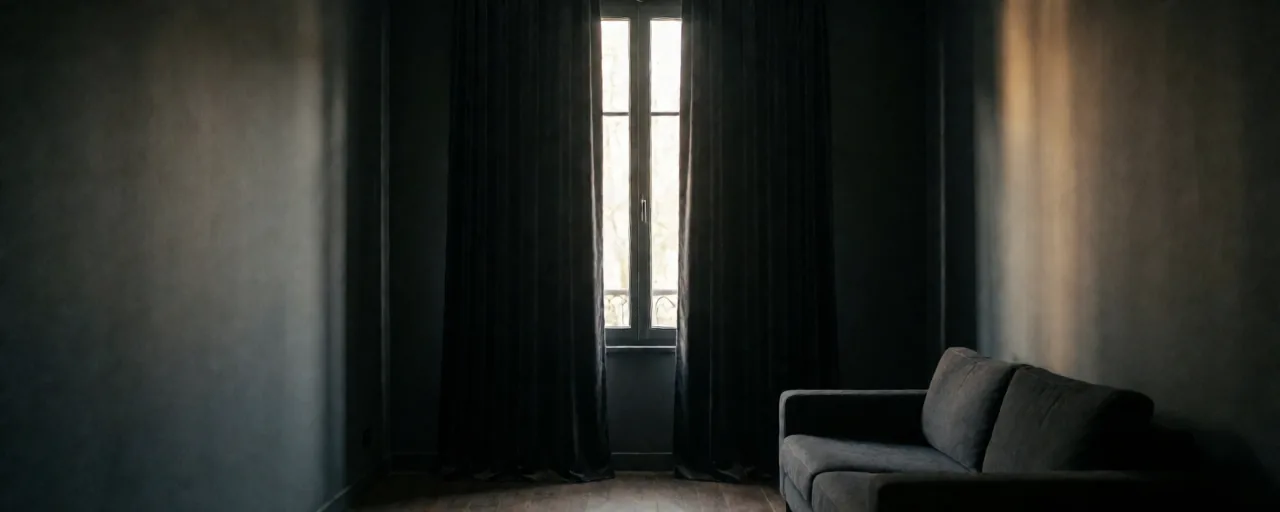
Window treatments do more for a dark interior than any other single purchase — they set the light level, they add the texture the aesthetic runs on, and they cover a wall's worth of surface area. They are also the thing people most often buy in the wrong size.
Almost every curtain that disappoints fails in one of two ways, and both are decided before the fabric matters. It is too narrow, so it hangs flat instead of gathering and reads like a bedsheet over the window. Or it is too short, so it stops above the floor and makes the ceiling look lower than it is. Get the width and the drop right and a mid-priced velvet will outperform an expensive panel bought in the wrong size.
Before you buy
Buy for fullness, not for the width of the window
Panels need to total roughly two to two and a half times the width of the window, not match it, because a curtain is supposed to stay gathered when closed. That usually means two panels per window at minimum and often four on a wide one. Gothic curtain sizing walks through it, and the curtain size calculator will do the arithmetic for your measurements.
Blackout is a spectrum, not a label
The word is used for everything from genuinely opaque to merely thick, and even real blackout fabric leaks light around the edges unless the panel is mounted wider and higher than the window. If you already own curtains you like, a separate liner is the cheaper fix. Blackout vs room-darkening vs light-filtering explains which is which.
Heavy fabric will sag a long rod
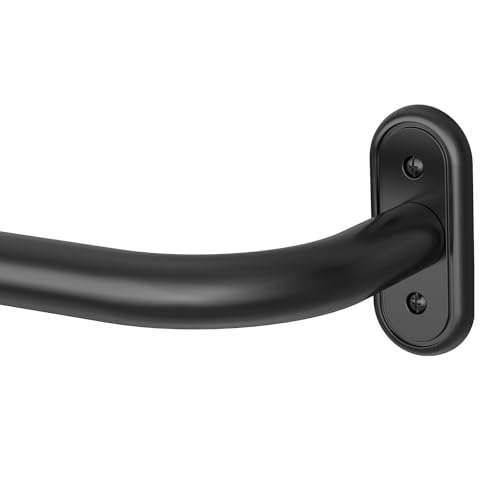
Velvet and lined damask are heavy, and a rod much over five feet needs a centre support bracket or it will bow in the middle over time. This is the most common way an otherwise correct curtain purchase goes wrong, and it is worth checking before ordering rather than after.
What to look at